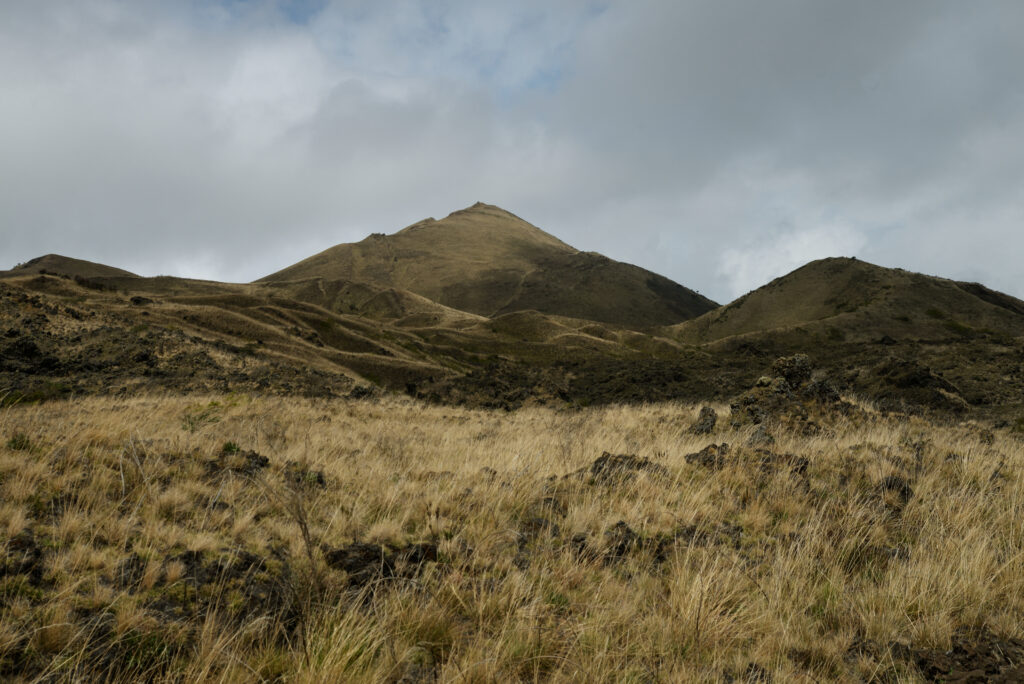
The area between the Cross and Sanaga rivers is a region of unusual ecological richness and diversity. This region has the highest mountain in West Africa, the volcano of Mount Cameroon (4095 m), part of a chain of highlands along a volcanic line that extends NW-SE from north-central Cameroon into the Gulf of Guinea. The South West Region also contains one of the largest relatively intact blocks of contiguous forest in West Africa,and has the highestmean annual rainfall on the African continent reaching over 10,000 mm at the coast. The region has four (04) national parks out of the eighteen (18) national parks in Cameroon. These national parks namely the Bakossi, Korup, Mount Cameroon, and Takamanda national parks; including two wildlife sanctuaries – the Banyang-Mbo and Tofala Hill wildlife sanctuaries, constitute some of the main biodiversity hot spots within the country.
The principal reason for the creation of these protected areas by the Government of Cameroon together with her conservation and development partners was to ensure that these unique ecosystems are sustainably managed. Some of the most important and threatened centres of biodiversity and endemism, in Cameroon in particular and in Africa in general are found within these protected areas. Among the taxa that exhibit particularly high levels of species richness and endemism in this region are primates, amphibians, birds, butterflies, dragonflies, fish, and vascular plants.
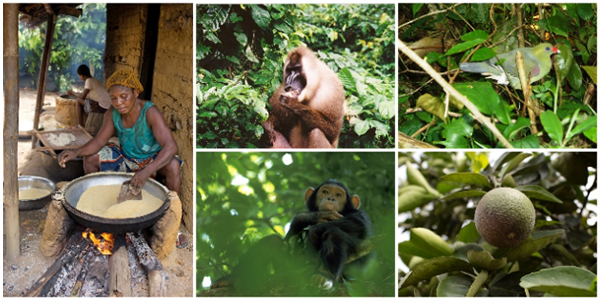
About ten species of primates are restricted to the area between the Cross and Sanaga rivers, most notably the critically endangered Gorilla gorilla diehli (Cross River gorilla), Pan troglodytes ellioti(Nigeria-Cameroon chimpanzee), and Mandillus leucophaeus(drill).Other species include Cercopithecus preussii (Preuss’s monkey), Euoticus pallidus talboti(Pallid needle-clawed galago) and Procolobus preussii (Preuss’s red colobus). The elusive Loxodonta cyclotis (forest elephant) is also still to be found in most protected areas.
The area also has the highest bird-species richness and endemism, due in part to theoverlap of Upper and Lower Guinea species hare. There are 400 bird species known to occur in Korup alone, while recently 220 bird species were observed to occur in Mount Cameroon along an altitudinal gradient between 350 m and 2250 m. On the latter mountain the strict endemics Francolinus camerunensis (Mount Cameroon francolin) and Speirops melanocephalus (Mount Cameroon speirops) are found only on that mountain.
The herpetofauna of Korup shows that 83 reptiles and 90 amphibians are present. Noteworthy among the amphibians are the toad genera Didynamipus, Werneria, and Wolterstorffina which have a restricted area of distribution. The frog genera Petropedetes and Phrynobatrachus have relatively large numbers of endemic species in this region.
While the Cross and Sanaga rivers form distributional barriers to many terrestrial vertebrates, they and their drainages contain different fish faunas, and the distributional barriers for the fish are typically the watersheds between the drainages. South-western Cameroon also contains a series of intriguing volcanic crater lakes that are home to some unique fish. About 140 species of fish are found in the Korup area, distributed among the Upper Cross, the Akpe-Yafe/Upper Ndian, and the Lower Ndian river systems, each with a differentfish fauna.
The butterfly fauna of Korup, together with neighboring Cross River National Park in Nigeria is the richest in all of Africa with well over 1,000 lowland rainforest species, equivalent to 6% of all butterflies described worldwide and almost one third of all species known from continental tropical Africa. As for dragonflies the region is with 179 known species one of the richest in the world with many endemics.
As for plant diversity it is one of the global hotspots with the Mount Cameroon shows over 2,400 plant species, Korup contains some 1,700 plant species while recently the Bakossi Mountains showed equal figures of plant diversity to Mount Cameroonwith over 2,400 plant species. The Bakossi Mountains, with the adjoining Rumpi Hills, constitute what is possibly the largest intact pristine block of submontane forest (800 m-2000 m alt) in Africa. It is this submontane forest, together with the adjoining lowland forest, that contributes the bulk of the remarkably high number of endemic taxa (82), and those threatened with extinction (232), emphasising the extraordinary biodiversity of the entire South-West Region.
“Discover the unparalleled biodiversity of South-West Cameroon, home to critically endangered primates, over 1,000 butterfly species, and thousands of unique plants. These protected areas are vital for the sustainable management of some of Africa’s most important ecosystems. Explore the extraordinary richness of wildlife and flora in this global hotspot.”
Cameroon forests in the South West Region are threatened by illegal chainsaw milling that serves both the domestic and Nigerian markets.
The forests of the South-West Region has an enormous variety of Non-Timber Forest Products (NTFP) that contribute to all aspects of rural life providing food, fuel, medicine, craft material and other household items. The magnitude of resource extraction depends on the floristic composition of the forest, the nature and intensity of harvesting, and the particular species under exploitation.
Prunus africana (Pygeum), an important commercial value medicinal plant which is harvested in the submontane and montane forests of Mt. Cameroon NP, and exported for the preparation of drugs to treat prostatitis was before the creation of the park done unsustainably. This important commercial interest rendered the species vulnerable to over-exploitation, in recognition of which it has been listed in CITES Appendix II and classified as vulnerable species in 1995.
In 2007 the European Union (EU) imposed a ban on the importation of Prunus africana bark. With the creation of the Mount Cameroon National Park in 2009 and the lifting of the ban on the exploitation of Prunus in 2010, MINFOF and partners facilitated the elaboration and implementation of a Prunus Management Plan to ensure its sustainable management and to generate benefits to support the livelihood of surrounding communities. A management plan which include a benefit sharing mechanism was approved in 2011 and is being implemented.
Presently the Park Service is working in partnership with the local communities, represented by the Mount Cameroun Prunus Common Initiative Group (MOCAP CIG) for the implementation of the management plan. The Park and its peripheral zone are considered as a single “Prunus Allocation Unit” (PAU).
Throughout South West Region, animal carcasses from a large variety of species are sold in bushmeat markets. Mammals make up the bulk of the trade and there is compelling evidence that this negatively affects many species. Over-exploitation is more severefor large-bodied and slow-reproducing species,mostof which are already classified as threatened by the International Union for Conservation of Nature (IUCN) and areprohibited to be hunted by national legislation. Bushmeat trading points exist in almost every town and many villages in the region.