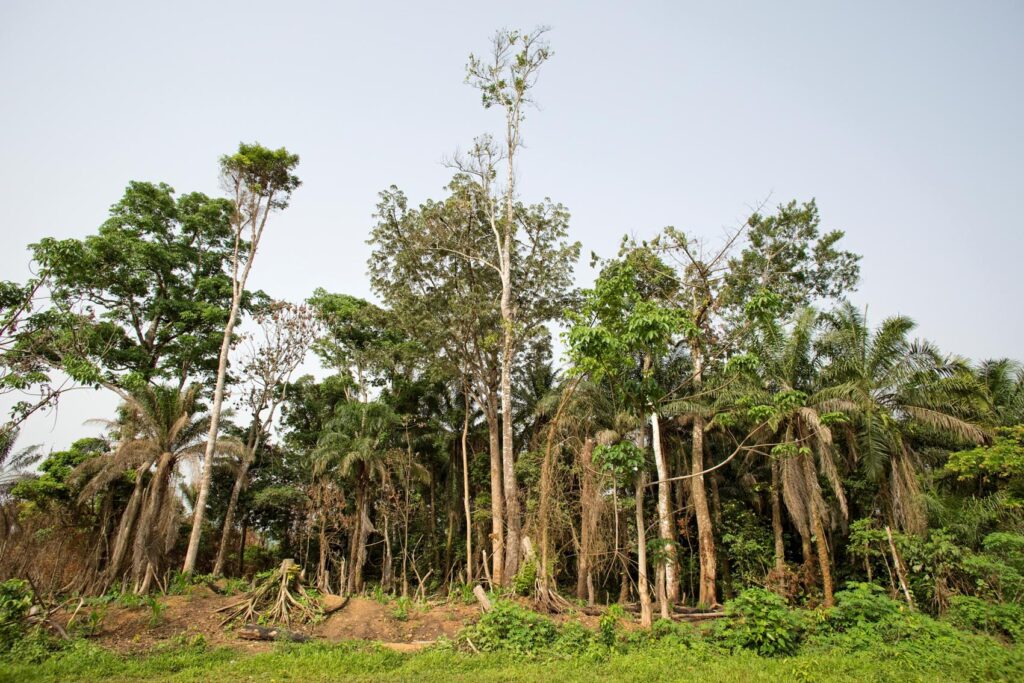
Mount Cameroun hosts one of the largest populations of Prunus africana in Cameroon. Prunus has an important economic, social, medicinal and scientific value for both local and international communities. Its bark, leaves and roots are traditionally used either singly or in association with other ingredients to treat a number of ailments including malaria, chest infections, stomach ache, rheumatism and gonorrhea. Prunus bark extract is also trade internationally as the basis of drugs for the treatment of benign prostatic hyperplasia.
With the creation of the Mount Cameroon National Park and the lift of the ban on the exploitation of Prunus in 2010, the Park Service in collaboration with the Regional Delegation of Forestry and PSMNR-SWR have developed a participatory sustainable management strategy for Prunus that maintains the resource base and ensures that its exploitation generates reasonable benefits to support the livelihood of surrounding village communities. The Park is working in partnership with the local communities, represented by MOCAP-CIG, in the management and benefits sharing from Prunus exploitation.
So far:
read more
With the ongoing harvesting of Prunus in the Park, farmers in the Mt Cameroon region also expressed the wish for their farms to be evaluated and their stock certified granting them the rights to exploit and commercialize their products. In order to address this constant request from farmers, a systematic 100% Prunus inventory in private owned farms/plantation was carried out in 2014 by the Regional Delegation of Forestry with the technical and financial support of PSMNR-SWR.
During the inventory, farmers and their farms were identified, located and registered. All Prunus trees within the farms were measured and recorded. Healthy trees of exploitable sizes (DBH ≥ 30cn) were registered and tagged with serial number. A total of 115 farms and a Prunus plantation were identified having a total of 3379 trees of which 681 trees were of exploitable sizes representing approximately 37.4 tons of wet bark (18.7 tons of dry bark). It is worth mentioning that most of the trees recorded at lower altitudes especially those below 400m were attacked by borers, ants, pests and other diseases.